
That established tree in your backyard has been there for decades. Now you’re facing cracks in your foundation, branches overhanging your roof or a trunk showing clear signs of decay. The question is whether keeping it puts your property and family at risk.
Tree removal becomes necessary when the risks outweigh the benefits. Dead or dying trees pose immediate hazards during Brisbane’s storm season when high winds can bring down compromised limbs or entire trunks. Structural defects like significant splits, large cavities or extensive decay reduce stability and increase the likelihood of failure.
Root systems damaging foundations, driveways or underground utilities create ongoing problems that worsen over time. Trees planted too close to structures may require removal to prevent future damage. Development projects or major landscaping renovations sometimes make removal unavoidable.
Critical Warning Signs
Knowing what to look for helps you identify problems before they become emergencies, and these can include the following:
- Extensive dead wood – Multiple dead branches throughout the canopy indicate serious health decline.
- Fungal growth at the base – Mushrooms or conks growing from the trunk signal internal decay that compromises structural integrity.
- Severe lean – A sudden lean or one that worsens over time suggests root failure or structural instability.
- Major trunk damage – Large cracks, vertical splits, or significant missing bark expose the tree to disease and weaken its structure.
- Root disturbance – Severed roots from construction, visible root rot, or exposed major roots reduce the tree’s anchoring ability.
- Proximity hazards – Trees with branches over homes, power lines, or high-traffic areas create unacceptable risk when showing signs of decline.
A professional arborist assessment determines whether these issues can be managed through pruning and treatment or if removal provides the only safe solution.

Understanding Brisbane’s Regulations
Brisbane City Council requires development approval for removing certain trees:
- Trees with trunk diameter over 40cm at 1.3 metres height on low-density residential properties
- Any tree identified as significant or heritage-listed
- Trees in environmentally significant areas or protected zones
Exemptions exist for trees posing imminent danger to people or property, though you’ll need documentation supporting this assessment. The approval process typically takes several weeks. Our team handles permit applications as part of our service, ensuring all documentation meets council requirements.
Why Professional Removal Is Essential
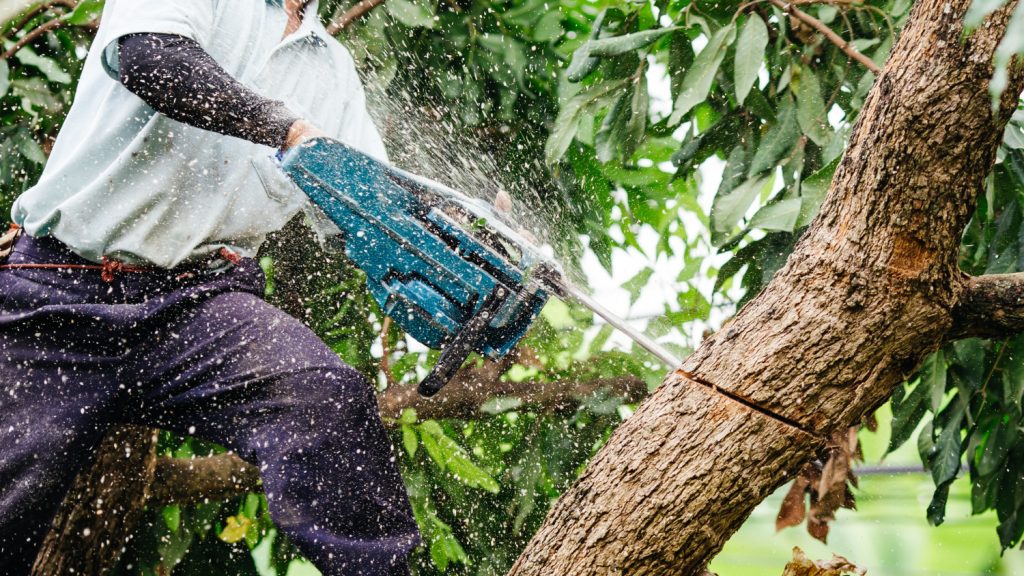
Tree removal ranks among the most dangerous property maintenance tasks. Falling branches can weigh hundreds of kilograms. Trees rarely fall where expected as wind, internal rot and uneven weight distribution all influence their trajectory. Overhead power lines add electrocution risk requiring specific safety protocols. Professional removal though follows a systematic approach:
- Site assessment – We evaluate the tree’s lean, weight distribution, nearby structures, and access limitations.
- Rigging and lowering – For trees near buildings, we dismantle them section by section, using ropes and pulleys to control each piece.
- Directional felling – Where space permits, we use wedges, ropes, and strategic cuts to drop trees safely in open areas.
- Debris management – Our team clears all wood and vegetation, leaving your property clean.
- Stump removal – We grind stumps below ground level, eliminating trip hazards and freeing the area for replanting.
Planning for What Comes Next
Removing a tree creates opportunity to improve your property. Thoughtful replanting maintains environmental benefits while avoiding previous problems. Choose species appropriate for the available space. Small to medium trees work well near homes, providing shade without threatening structures. Native species adapted to Brisbane’s climate establish quickly and support local wildlife without excessive water or maintenance.
Proper placement prevents repeating past mistakes. Plant large growing species away from buildings, pools, and underground services. Account for mature size when spacing trees relative to structures and property boundaries.
In any case, our qualified arborists assess each situation thoroughly, explaining your options and recommending solutions that balance safety, budget and your property goals. We handle all aspects of the process, so just call us.