
Your palm tree’s fronds are turning yellow and the crown looks sparse compared to last year. New growth has slowed or stopped entirely. These changes signal problems that require attention before they become irreversible.
Palms communicate distress through visible symptoms that follow predictable patterns and understanding these signs helps you act before minor stress becomes permanent damage.
1. Stunted or absent new growth
Palms grow from a single terminal bud at the crown. When this bud stops producing new fronds, the tree has entered serious decline. Healthy palms consistently push out fresh growth throughout the growing season.
2. Discoloured fronds
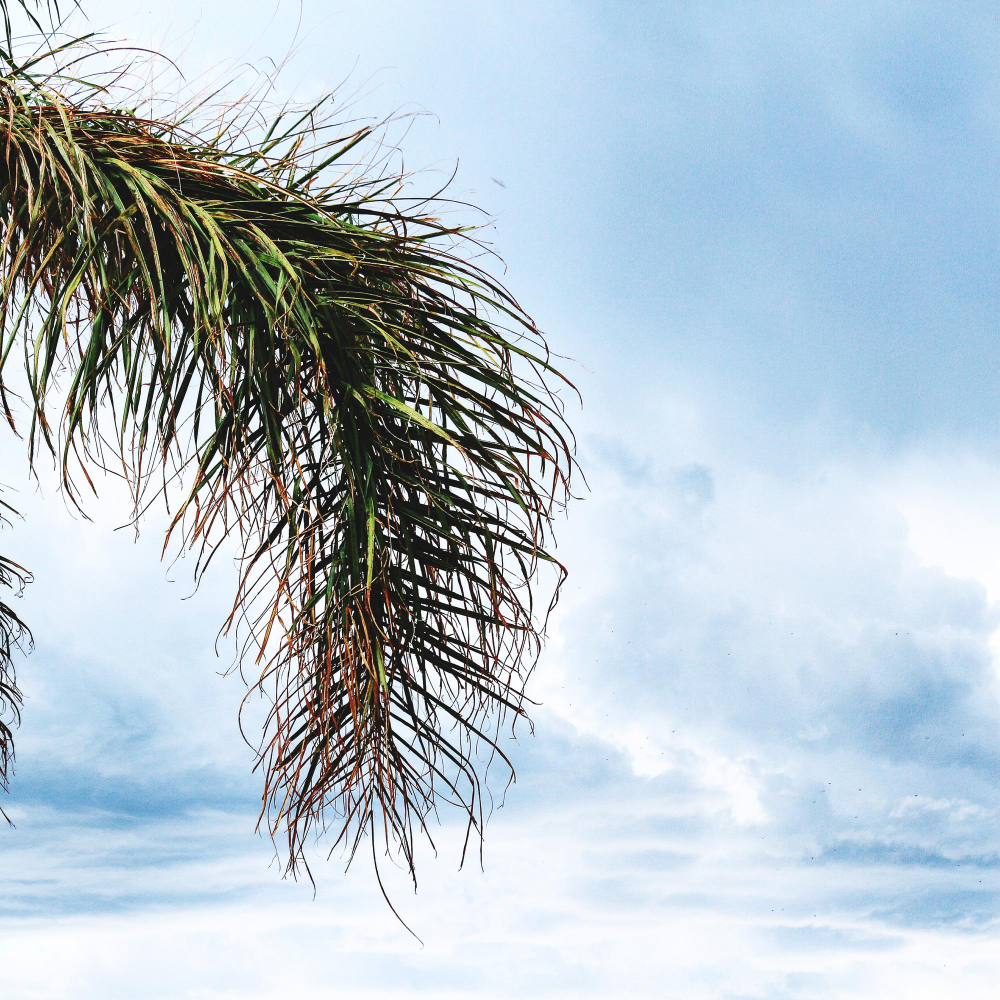
Yellowing fronds indicate nutrient deficiencies or water stress. Browning fronds, particularly starting from the tips, suggest the tree cannot transport water and nutrients properly. Uniform discolouration across multiple fronds points to systemic problems rather than natural aging.
3. Brittle or dry texture
Fronds that crack easily or feel papery when touched indicate the tree has lost its ability to maintain proper moisture levels internally.
4. Drooping or wilting crown
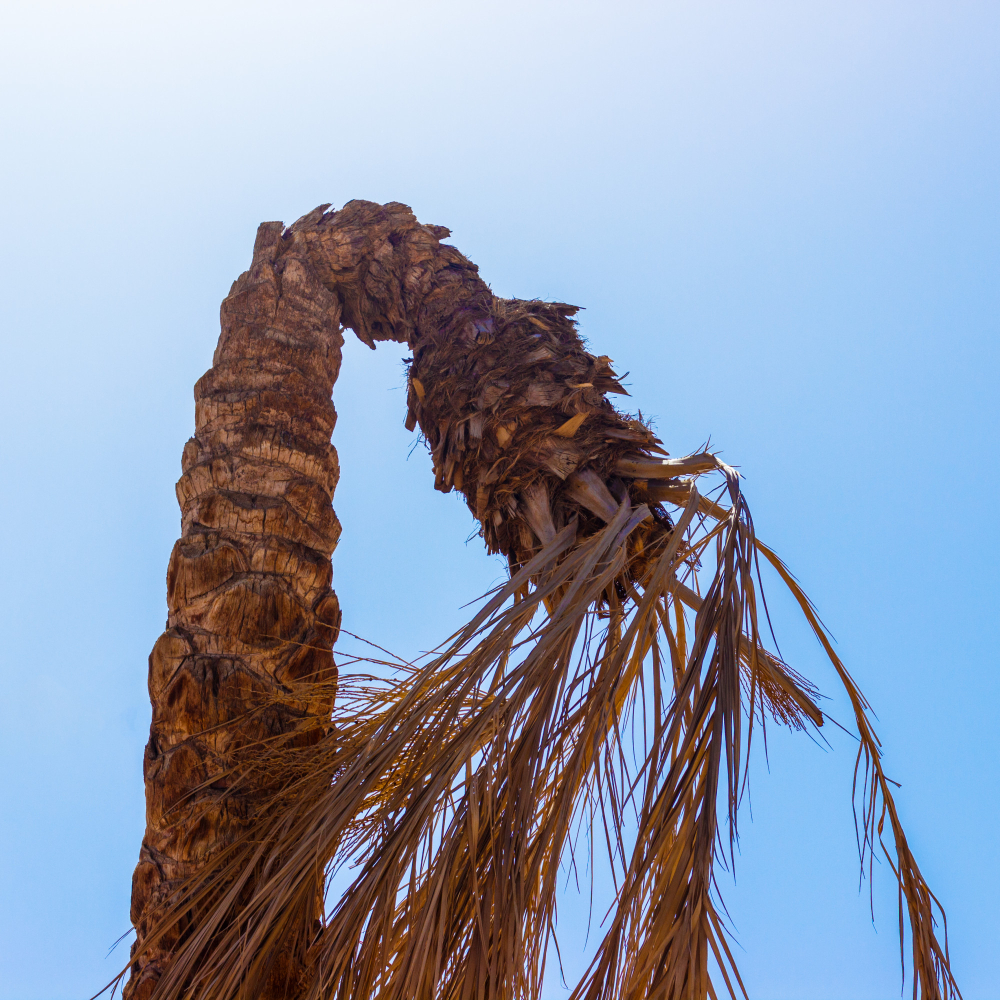
A palm’s crown should stand upright and full. When fronds begin drooping or the entire crown appears to sag, the structural integrity of the trunk or root system has been compromised.
5. Trunk deterioration
Soft spots, discolouration, or oozing sap from the trunk indicate fungal infection or internal rot. The trunk should remain firm and consistent in colour throughout its length.
Common Causes Behind a Declining Palm Tree
Once you notice your palm tree isn’t looking its best, the next step is understanding why. Watering issues are one of the most frequent causes of decline. Palms need consistent moisture, but they don’t cope well with extremes. Too little water can cause fronds to curl and dry out, whilst too much can suffocate the roots, leading to yellowing leaves and slow decline. Shallow watering can be just as problematic, as it leaves the deeper root system thirsty even though the surface soil appears wet.
Soil quality also plays a major role in palm health as poorly draining soil can trap moisture around the roots, while soil that’s too acidic or compacted can limit nutrient absorption. Over time, this weakens the tree and leaves it vulnerable. Nutrient deficiencies are another common issue, especially a lack of potassium, magnesium or iron. These deficiencies often show up as discoloured fronds or uneven growth. Sunlight exposure matters too, as some palms struggle in harsh, direct sun while others fail to thrive in heavy shade.
Dealing With Pests, Disease and Environmental Stress
Pests and diseases are often overlooked until damage becomes obvious. Insects can attack the fronds, trunk or crown, slowly draining the tree’s energy and interfering with growth. Fungal diseases may cause issues with rotting or general decline that worsens over time if left untreated. Regular inspections can help catch these issues early, especially after periods of heavy rain or heat stress.
Environmental changes can also take a toll on palms. Construction work nearby, changes to drainage, or soil compaction from vehicles can disturb the root system without any obvious signs above ground at first. Transplant shock is another factor, particularly for newly planted palms that haven’t had time to establish strong roots.
Can a Dying Palm Tree Be Saved?
In many cases, a palm tree can recover if the underlying issue is addressed early enough. Adjusting watering habits is often the first step, ensuring the tree receives deep, consistent moisture without becoming waterlogged. Improving soil conditions can also make a significant difference, whether that means enhancing drainage, correcting pH levels, or replenishing nutrients with a fertiliser designed specifically for palms.
Removing severely damaged fronds may help redirect energy back into healthy growth, though care needs to be taken not to over prune. Treating pests or disease promptly can also slow or stop further decline. That said, palms are less forgiving than many other tree types. Once the central growing point is damaged, recovery becomes unlikely. If the tree shows no new growth over an extended period or the trunk begins to deteriorate, tree removal may be the safest option to prevent falling fronds or structural failure.
Knowing When Professional Advice or Removal Is Needed
A dead or severely weakened palm tree can pose a real safety risk, especially once large fronds begin to detach or the trunk loses strength. This is where professional assessment becomes important. An experienced arborist can determine whether the palm still has a chance to recover or if removal is the most practical solution. Attempting to remove a palm without the right equipment or experience can be dangerous, as palms are heavy and unpredictable once cut.
Knowing when to step in and when to let go of a tree, helps protect both your property and the overall health of your landscape.