
If you’ve noticed a tree in your yard leaning to one side, it’s natural to feel concerned. A tilting trunk can look unstable and even dangerous, raising the question of whether the tree needs to be removed or not.
The truth is, not every leaning tree is a hazard and in fact many naturally develop a lean as they adapt to their surroundings. The key is understanding why the lean is happening and knowing the difference between a harmless tilt and one that signals trouble. By learning the common reasons behind leaning trees and the warning signs that indicate risk, you can make better decisions for your landscape and your safety.
Natural Causes of Tree Leaning
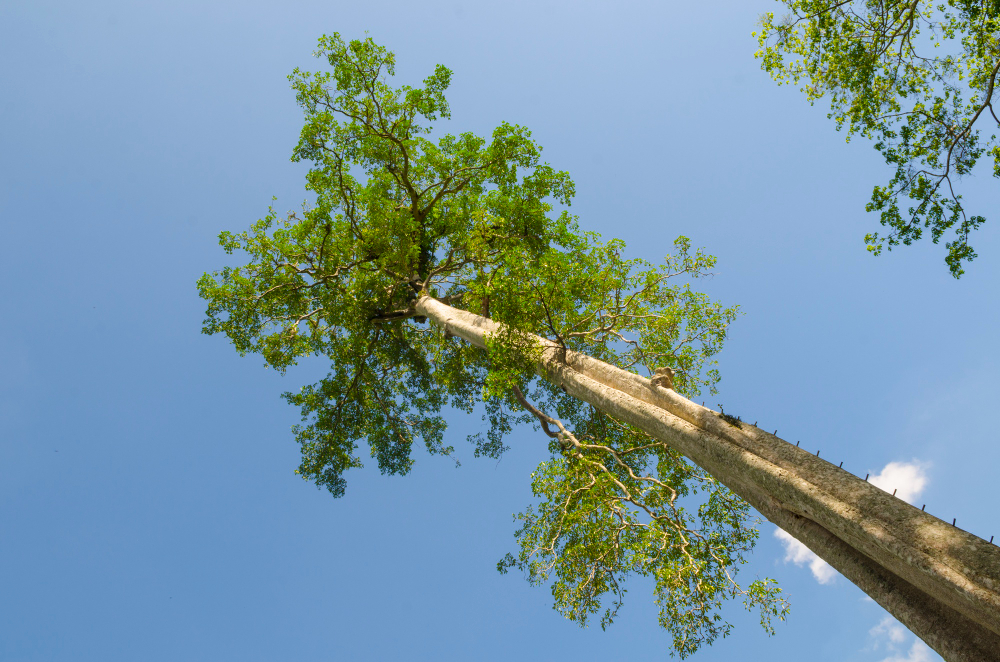
Trees are living organisms, and like people, they adapt to their environment over time. One of the most common causes of leaning is phototropism, the process where trees grow toward light. If a tree is planted in a shaded spot or near larger structures that block sunlight, it will gradually angle itself to capture more sun. This type of lean usually develops slowly and doesn’t indicate poor health.
Another natural factor is wind exposure, so any trees that are regularly buffeted by strong winds may develop a permanent lean as their trunks grow against the prevailing force. In coastal or elevated regions, this is an especially common sight and often doesn’t pose any immediate threat.
Young trees also lean harmlessly at times as they adjust to soil conditions, surrounding vegetation or even because of their own uneven growth patterns. As long as their root systems remain strong and their foliage is healthy, these gradual tilts are rarely a cause for alarm.
Situations That Can Lead to Trouble
While many leaning trees are perfectly safe, others can signal deeper issues such as root damage. Obviously trees rely on their roots for stability, and if those roots are compromised the tree can lose its anchoring. Once that happens, a lean may develop suddenly and the tree could be at risk of falling.
Structural imbalances also create problems, so when one side of a tree grows more heavily than the other either due to uneven pruning, storm damage or disease, the weight distribution shifts, gradually pulling the trunk off centre. Similarly, unstable or shifting soil can undermine a tree’s base, especially on slopes or areas prone to flooding.
Additionally, a young tree that was not secured well when planted may grow with a tilt from the start. Whilst sometimes this can be corrected by carefully replanting in its early years, improper planting combined with wind exposure often leads to long term leaning that may worsen as the tree matures.
Warning Signs That Shouldn’t Be Ignored
It’s important to know when a leaning tree crosses the line from natural adaptation to serious danger. A tree that suddenly develops a lean, especially after heavy rain or strong winds, should raise immediate concern. Likewise, if you notice visible root damage, cracks in the trunk or soil lifting at the base, these are red flags that the tree may not be secure.
Large, mature trees that lean toward houses or other structures are especially risky, as their sheer size and weight mean that if they were to fall, the potential damage could be severe! In such cases, professional assessment becomes essential.
The Role of Regular Tree Care
The best way to prevent a leaning tree from becoming a hazard is through regular maintenance and monitoring. Just like any part of your property, trees benefit from expert care to stay healthy and strong. Trained arborists can identify early warning signs, address imbalances through pruning and provide support systems such as bracing or cabling where appropriate.
In some situations, tree removal may be the safest course of action, but that decision should always be based on a professional inspection. Preventative care and timely intervention not only protect your property but also preserve trees that might otherwise be unnecessarily cut down.