
A tree crashing onto your house is the sort of situation that can leave you standing there wondering what to do first. The damage may look obvious, but there can also be serious hazards that are difficult to see from the ground. Large sections of the tree may still be under tension, parts of the roof could be unstable, and fallen branches may have damaged electrical wiring or other parts of the property. Even if everyone is safe, there is usually a lot to deal with at once.
The safest approach is to slow things down and deal with the emergency in the right order. Get everyone away from the affected area, identify any immediate dangers, arrange professional assistance and contact your insurer before substantial clean-up begins. In North Brisbane, severe weather can bring strong winds and heavy rain that expose weaknesses in trees, particularly where branches, roots or trunks have already been compromised. Knowing what to do before you start moving anything can prevent an already stressful situation from becoming much worse.
1. Get People Out First as Everything Else Can Wait
Clear people and pets away from the tree and any part of the house it has hit. A tree that looks settled can still shift, especially if branches are wedged against the roofline or caught in nearby trees. Limbs that appear grounded may actually be suspended, held by tension that releases the moment something else moves.
Stay well back from damaged roofing, broken glass, leaning branches and anything resembling a power line. Treat any downed line as live regardless of appearance as the absence of sparks tells you nothing about whether it’s carrying current. Call your electricity provider or emergency services immediately in that case, and call emergency services first if anyone is trapped, there’s a fire risk, or part of the structure looks close to collapse. The timber isn’t going anywhere.
2. Leave the Cutting to Someone Qualified
It’s tempting to grab a chainsaw and start clearing a path. Resist it as a fallen tree behaves nothing like a standing one, where the weight that was once distributed through the canopy is now unpredictable, branches can be pinned under real pressure, and the trunk may be the only thing keeping a damaged section of roof from coming down further.
Cut the wrong branch and you can release tension that sends another section moving without warning. Add in nails, roofing sheets, broken glass and the chance of live wiring hidden in the branches, and this becomes a job for training, not enthusiasm. Tree specialists will assess the load and tension before making a single cut, using rigging, ropes or cranes to control each section as it comes free. Until that expertise is on site, leave the tree exactly where it landed.
3. Bring in a Professional Removal Team
With immediate risks under control, call an experienced tree removal team to assess the tree properly. They’ll work out whether it needs to be dismantled where it sits, lifted away in sections, or removed with specialist machinery, depending on the tree’s size, its position and how much of the house is affected.
Part of that assessment is working out what’s actually holding the tree up. If the trunk is resting across your roofline, the building itself may be carrying some of its weight, and removing it too quickly could load damaged structures further. A properly run job reduces that weight gradually and controls each section as it’s cut.
If a storm brought the tree down, check whether other trees on the property took damage too as a second unstable tree or hanging branch can become a hazard for the crew and for anyone returning to the yard!
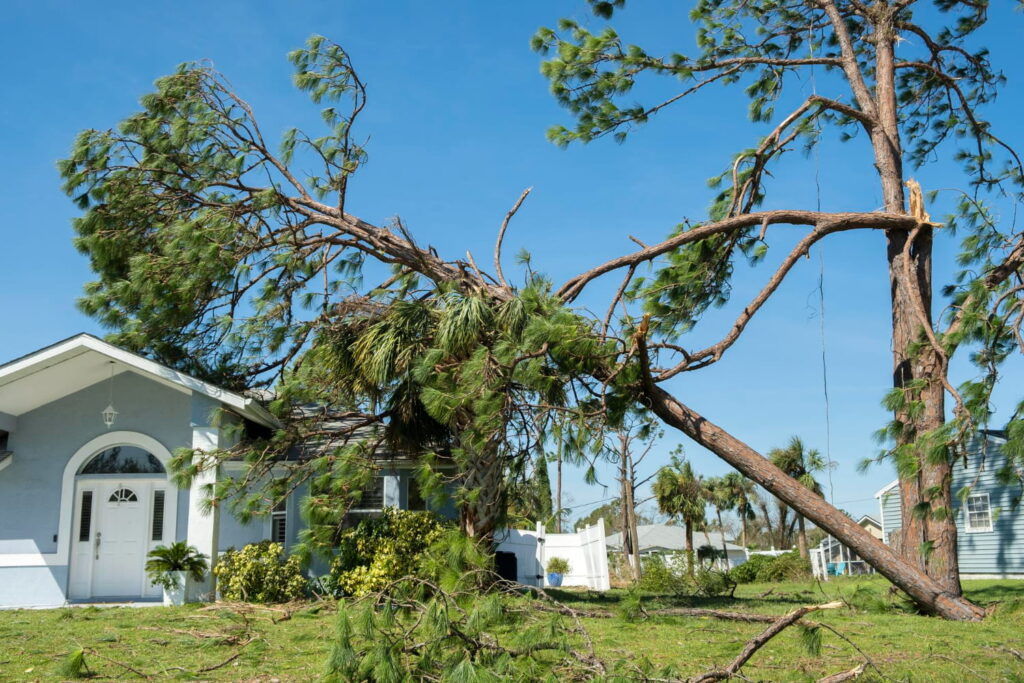
4. Photograph Everything Before the Clean-Up Starts
If it’s safe to do so, take photos and video of the damage before the tree comes off the property. These records will matter more than you expect once you’re dealing with your insurer so try to capture:
- The overall scene, from a safe distance
- The trunk and any broken branches
- Roof damage and affected gutters
- Windows, fences and anything else the tree touched on its way down
Call your insurer early and ask what they need from you before emergency work goes ahead. Some policies cover reasonable steps taken to prevent further damage, while cover for the removal itself often depends on your specific policy wording. Keep every quote and invoice connected to the emergency work, and hold off on permanent repairs until your insurer has had a chance to inspect the property.
5. Check the House Once the Tree Is Gone
Getting the tree off your property doesn’t mean the job is finished. Impact damage can hide in roof framing, ceiling cavities, wall structures and gutters, and water finds its way through openings far smaller than you’d think. Left unchecked, that alone can cause a second round of damage. Depending on what you find, you may need:
- A building professional, to assess structural damage and any temporary roof covering
- An electrician, if wiring, switchboards or outdoor power connections may have been affected
It’s also worth having the tree itself inspected once it’s down. Broken roots, internal decay, cavities or soil movement can explain why it failed, because sometimes a healthy tree is simply overwhelmed by extreme weather, sometimes the fall points to a problem that was building for years.
6. Look at the Rest of Your Trees
Once the immediate situation is dealt with, walk the rest of the property with a more critical eye. A tree doesn’t need to look sick to have a structural problem since cracks, dead limbs, decay, cavities, poor branch unions and significant lean are all worth assessing, even on a tree that otherwise looks fine.
An arborist assessment can catch these issues before they become emergencies. Professional pruning can reduce weight or remove a defective limb, although a tree with serious structural issues may need to come out altogether. Root disturbance and shifting soil, particularly after heavy rain, can also affect stability.
For homeowners across the region, getting trees checked before storm season arrives is one of the more useful things you can do with an afternoon, whilst also providing a chance to fix a known problem while conditions are calm, rather than finding out about it during the next system that rolls through. If you would like our experts to assess the trees around your property, we can identify potential hazards and recommend the most appropriate way to manage them before they become a problem.